Cat Ultrasound: What Pet Owners Should Expect in Chicago
Cat Ultrasound: What Pet Owners Should Expect in Chicago
If your cat has been showing unusual symptoms or if your veterinarian has recommended advanced diagnostics, you may be wondering what exactly a cat ultrasound involves. For many pet owners in Chicago and the surrounding communities, the prospect of specialized imaging can be both reassuring and a little daunting. At 4 Paws Imaging, located at 116 W Grand Avenue, Chicago, IL 60654, we understand how important your cat’s health is to you. Our board-certified specialists use advanced technology to deliver clear, accurate answers through cat ultrasound and other diagnostic imaging services. In this guide, we’ll explain when a cat ultrasound is recommended, what the process looks like, how it helps uncover the source of your cat’s health issues, and what you can expect as a pet owner in Chicago. By the end, you’ll know why so many local veterinarians trust our team for their patients’ imaging needs and how this powerful tool can support your cat’s wellbeing.
Recognizing When Your Cat May Need an Ultrasound
Cats are masters of hiding discomfort, which makes it challenging for pet owners to spot early signs of illness. However, certain symptoms should prompt a conversation with your veterinarian about advanced diagnostics like a cat ultrasound. Common warning signs include unexplained weight loss, vomiting that persists or recurs, changes in appetite, straining in the litter box, blood in urine or stool, or a sudden distended abdomen. If your cat shows any of these symptoms, your primary veterinarian may recommend an ultrasound to get a closer look at your cat’s internal organs.
In some cases, a cat ultrasound is used to investigate a suspected mass, abnormal bloodwork results, or to monitor ongoing conditions such as kidney or liver disease. It’s also a valuable tool for assessing heart health, especially if your cat has a new heart murmur or signs of heart disease. By pinpointing the source of your cat’s symptoms, an ultrasound performed by a specialty imaging team helps your veterinarian create a targeted treatment plan.
Why Do Cats Need Ultrasound Imaging?
While physical exams and basic blood tests provide essential information, they have limitations when it comes to seeing inside your cat’s body. Ultrasound imaging uses safe, non-invasive sound waves to create real-time, detailed images of internal organs and tissues. This technology is especially helpful for examining the abdomen, heart, and even the thyroid gland in cats.
Your veterinarian may refer your cat for an ultrasound to evaluate the liver, spleen, kidneys, bladder, or intestines for signs of disease, inflammation, or masses. Cat ultrasound is also used to detect fluid accumulation, urinary tract issues, organ enlargement, or structural changes that might not be visible on X-rays. In cardiac cases, echocardiograms—a specialized form of ultrasound—allow our veterinary imaging specialists to assess the size, shape, and function of your cat’s heart in detail.
Diagnostic imaging like ultrasound plays a vital role in confirming or ruling out certain conditions. For example, if your cat has symptoms that suggest a urinary blockage, an ultrasound can quickly determine whether there are bladder stones, tumors, or other abnormalities. This targeted approach means your cat receives appropriate care faster and with less stress.
What to Expect During Your Cat’s Ultrasound Appointment
When your veterinarian refers your cat for imaging at 4 Paws Imaging, you can expect a process designed with your pet’s comfort and safety in mind. Our experienced veterinary team will review your cat’s medical history and discuss the goals of the ultrasound with you. Most cats do not require sedation for an ultrasound, though mild sedation may be recommended in very anxious or fractious cats to ensure clear images and a stress-free experience.
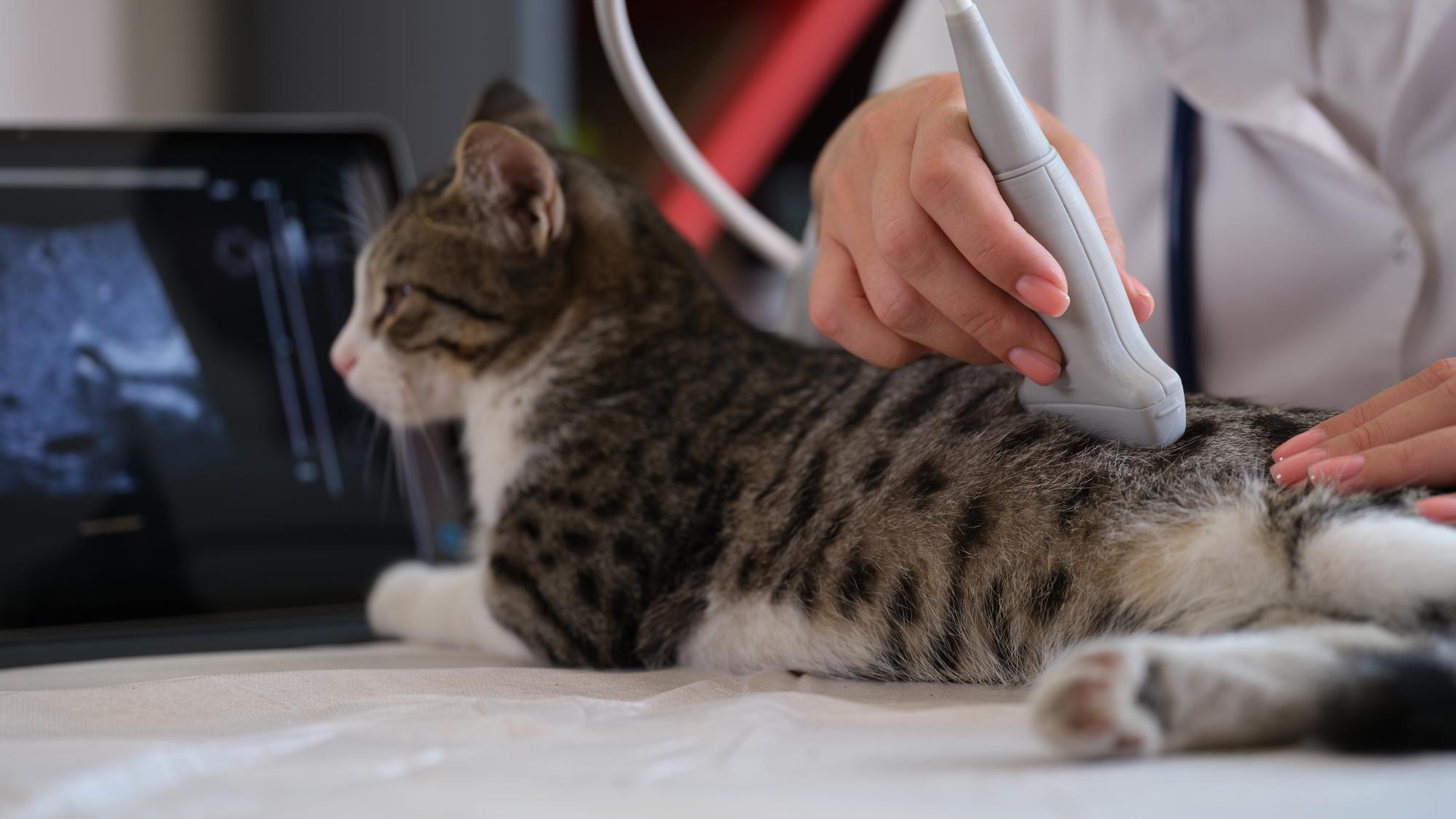
During the ultrasound, your cat will lie comfortably on a padded table while a specially trained sonographer gently moves a small probe over the area of interest. A patch of fur is usually shaved to allow better contact with the skin. The procedure is painless, and most cats tolerate it very well, especially in the quiet, low-stress environment provided by our team.
The length of the appointment varies depending on the area being imaged. For example, a focused abdominal ultrasound may take about 30 minutes, while an echocardiogram or a more comprehensive study might take longer. Our board-certified specialists interpret the images, providing a detailed report to your referring veterinarian—often the same day—so that you receive answers quickly.
How Cat Ultrasound Helps Diagnose Your Cat’s Health Issues
Ultrasound is a highly sensitive tool for uncovering a range of feline health problems. It can help detect conditions such as kidney stones, liver shunts, bladder tumors, intestinal obstructions, and abnormal lymph nodes. Additionally, ultrasound is invaluable for identifying fluid buildup from heart failure or other causes, characterizing masses, and guiding needle biopsies or fluid sampling for a more definitive diagnosis.
In heart cases, echocardiography allows our specialists to assess the walls, chambers, valves, and function of your cat’s heart in real time. This is essential for diagnosing hypertrophic cardiomyopathy (the most common heart disease in cats) and other cardiac conditions that may not cause obvious symptoms until they become serious.
When it comes to thyroid issues, a thyroid ultrasound can reveal nodules, cysts, or enlargement that may require further evaluation or treatment. By providing detailed images, cat ultrasound removes much of the guesswork, giving your veterinarian a clearer roadmap for next steps.
Preparing Your Cat for an Ultrasound
Before your cat’s ultrasound appointment, your referring veterinarian and the team at 4 Paws Imaging will provide specific instructions. In most cases, fasting your cat for several hours before the procedure is recommended to reduce gas in the abdomen, which can interfere with imaging. However, water should always be available. If your cat is on medication, check with your veterinarian about whether to administer it on the day of the exam.
Try to keep your cat calm and reduce stress before the visit. Bring any relevant medical records or recent test results if your veterinarian has not already forwarded them. The goal is to make the experience as smooth as possible for you and your cat, while ensuring that we obtain the clearest images to guide your pet’s care.
What Happens After the Ultrasound?
Once the ultrasound is completed, our imaging specialists will analyze the images and compile a thorough report for your primary veterinarian. In most cases, you will receive preliminary results the same day, with a full report to follow. Your veterinarian will review the findings with you and discuss any recommended next steps, which could include additional diagnostics, medical management, or in some cases, surgical intervention.
The information provided by a cat ultrasound often leads to more precise treatment options, minimizing unnecessary procedures and allowing for earlier intervention. Our goal at 4 Paws Imaging is to support your veterinarian with fast, accurate results so your cat can get back to feeling their best as quickly as possible.
Why Choose a Specialty Imaging Team for Cat Ultrasound in Chicago?
Advanced imaging is both an art and a science, requiring specialized training and equipment. At 4 Paws Imaging, our board-certified specialists and dedicated veterinary imaging professionals focus exclusively on diagnostic imaging for pets. This means your cat benefits from the most modern technology and the expertise needed to interpret complex findings. Our facility is equipped to handle a wide range of cases, from routine abdominal ultrasounds to complex cardiac studies.
We work closely with veterinarians throughout Chicago and surrounding areas, providing answers and peace of mind for pet owners facing difficult health questions. Our central location at 116 W Grand Avenue, Chicago, IL 60654 makes it convenient for families in Mont Clare, Elmwood Park, River Grove, and the entire Chicagoland area to access advanced diagnostic care for their cats.
When Should You Seek a Cat Ultrasound for Your Pet?
If your cat is experiencing symptoms like persistent vomiting, weight loss, changes in bathroom habits, or if your veterinarian has found abnormalities on exam or bloodwork, it may be time to consider a cat ultrasound. Early imaging can provide critical answers and help your veterinarian tailor treatment to your cat’s specific needs.
You should always consult with your primary veterinarian first, as they can help determine whether a referral for advanced imaging is the right step. If you are searching for a specialty imaging vet near me, know that our team at 4 Paws Imaging is here to support both you and your veterinarian every step of the way.
Supporting Your Cat’s Health with Diagnostic Imaging
Your cat’s health and comfort are our highest priorities. If you have questions about the cat ultrasound process or have been referred for imaging, our veterinary imaging professionals are happy to guide you through the next steps. Timely diagnostics can make a world of difference in managing your cat’s health, providing reassurance and helping your veterinarian deliver the best possible care.
To schedule a referral appointment or to learn more about our advanced imaging services, contact 4 Paws Imaging at (630) 746-1382 or visit us at 116 W Grand Avenue, Chicago, IL 60654. We are committed to serving pets and pet owners throughout Chicago and surrounding communities with compassion, expertise, and state-of-the-art technology. If you need specialized cat ultrasound services or are looking for a specialty imaging vet near me, our board-certified team is ready to help you find answers and peace of mind.
This blog is for informational purposes only and does not substitute for professional veterinary advice. Always consult your veterinarian for specific concerns about your cat’s health.