How Abdominal Ultrasounds Help Diagnose Dog Illnesses
How Abdominal Ultrasounds Help Diagnose Dog Illnesses
If your dog is suddenly showing worrying symptoms like vomiting, diarrhea, or a painful belly, it is natural to feel anxious and want answers quickly. For many pet owners in Downers Grove and surrounding communities, unexplained digestive problems, weight loss, or urinary changes in a beloved dog can be both distressing and confusing. Fortunately, veterinary imaging can provide clear answers when other tests leave questions. At 4 Paws Imaging, located at 2581 Ogden Avenue, Downers Grove, IL 60515, our advanced abdominal ultrasound services help uncover the true cause of your dog’s illness in a gentle, non-invasive way. In this blog, we will explore how abdominal ultrasounds work, which symptoms might prompt your veterinarian to recommend this test, and what you can expect from your dog’s appointment with our specialty imaging team.
Whether your family veterinarian has referred your dog due to persistent vomiting, a swollen abdomen, or other concerning signs, understanding the role of abdominal ultrasounds can help you navigate the next steps with confidence. We will also cover how this technology guides treatment decisions, the kinds of illnesses it can detect, and why choosing a specialty imaging provider like 4 Paws Imaging gives your dog access to the highest standard of diagnostic care.
Recognizing When Your Dog Might Need an Abdominal Ultrasound
Dogs are experts at hiding discomfort, so subtle symptoms can easily be overlooked until they become serious. Knowing which signs may signal a deeper internal issue is the first step toward helping your dog feel better. Common reasons a veterinarian might recommend an abdominal ultrasound include ongoing vomiting, changes in appetite, unexplained weight loss, diarrhea, or visible swelling of the abdomen. Symptoms such as straining to urinate, blood in the urine, or repeated accidents in the house can also indicate a problem within the urinary or reproductive systems.
Some dogs present with more sudden symptoms, such as a painful, distended belly or collapse, which are always cause for immediate veterinary attention. To help you better understand when to seek advanced imaging, our website offers detailed information about specific signs like vomiting in dogs, diarrhea in dogs, swollen or bloated stomach symptoms, and unexplained weight loss. If your dog is experiencing ongoing digestive issues, excessive drinking, or abnormal urination, these resources can help clarify whether an abdominal ultrasound might be recommended as part of a complete diagnostic workup.
Why Do These Symptoms Occur? Understanding the Underlying Causes
When a dog is showing signs like vomiting, diarrhea, or abdominal pain, there are many possible reasons. Digestive issues can stem from inflammatory bowel disease, foreign object ingestion, intestinal tumors, or chronic infections. In some cases, metabolic conditions such as liver or kidney disease may cause subtle changes in appetite, thirst, or urination patterns. Urinary tract problems, including bladder stones or infections, can also lead to discomfort, straining, or blood in the urine.
A swollen or bloated abdomen should never be ignored, as this can signal life-threatening emergencies like gastric dilatation-volvulus (GDV), internal bleeding, or severe organ dysfunction. Additionally, reproductive issues such as pyometra (a dangerous infection of the uterus in unspayed females) or pregnancy complications may require urgent attention. Because so many illnesses share similar symptoms, pinpointing the exact cause through a physical exam alone can be challenging, which is where advanced imaging comes in.
How Abdominal Ultrasounds Work: What to Expect During Your Dog’s Appointment
Abdominal ultrasounds provide a clear window into your dog’s internal organs using sound waves rather than radiation. This non-invasive procedure allows our veterinary imaging specialists to visualize the liver, spleen, kidneys, bladder, intestines, stomach, adrenal glands, and reproductive organs in real time, helping to identify abnormalities like masses, fluid accumulation, stones, or inflammation.
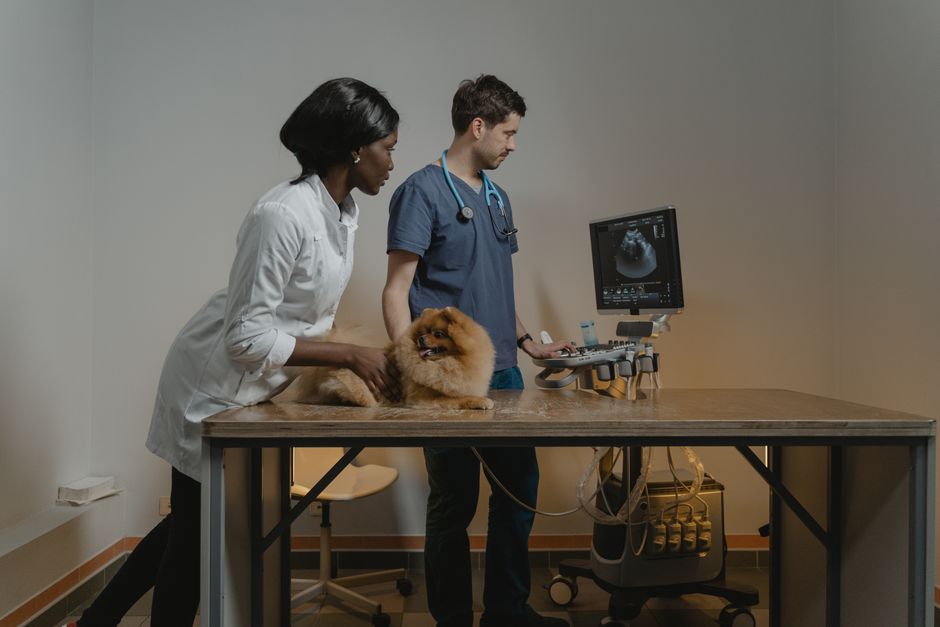
During your dog’s appointment at 4 Paws Imaging, your dog will rest comfortably on a padded table while a gentle, water-based gel is applied to the abdomen. Most dogs tolerate the procedure very well, and sedation is rarely necessary unless a dog is especially anxious. Our team of board-certified specialists uses state-of-the-art equipment to capture detailed images, which are then interpreted to help your primary veterinarian make informed decisions about treatment.
Your referring veterinarian may ask you to withhold food or water for several hours before the appointment to improve image quality. For more details about how abdominal ultrasounds are performed and what you can expect on the day of your visit, you can explore our abdominal ultrasound services page.
What Health Issues Can Abdominal Ultrasounds Help Diagnose?
Abdominal ultrasounds are a crucial tool for detecting a wide range of internal problems in dogs. This technology can reveal tumors or abnormal growths, liver or spleen enlargement, kidney disease, bladder stones, and intestinal blockages. It is also essential for identifying free fluid in the abdomen, which may indicate bleeding, infection, or organ rupture. In breeding dogs, reproductive ultrasounds can confirm pregnancy or diagnose complications.
For chronic conditions such as inflammatory bowel disease, pancreatitis, or unexplained weight loss, ultrasounds help clarify the diagnosis when bloodwork and X-rays are inconclusive. If your dog has an abdominal mass or lump, an ultrasound can help determine whether it is benign or suspicious and guide your veterinarian in obtaining samples for further testing. Learn more about when an abdominal mass or lump in dogs may require imaging and expert evaluation.
Treatment and Next Steps After an Abdominal Ultrasound
Once imaging is complete, the results are interpreted by our veterinary imaging specialists and shared promptly with your referring veterinarian. This allows your primary care team to develop a precise treatment plan tailored to your dog’s needs. Depending on what the ultrasound reveals, recommendations may involve medical management, dietary changes, further diagnostic tests, or referral to a surgical or internal medicine specialist. In some cases, the ultrasound may show that no significant abnormalities are present, offering reassurance and helping to avoid unnecessary treatments.
Throughout the process, our team at 4 Paws Imaging is committed to collaborating closely with your family veterinarian to ensure your dog receives the most appropriate and effective care. We understand that waiting for answers can be stressful, so we strive to provide timely, compassionate communication and support at every step.
Preventing Digestive and Abdominal Problems at Home
While not every illness can be prevented, there are steps you can take at home to reduce the risk of digestive and urinary issues in your dog. Feeding a high-quality, balanced diet, avoiding sudden changes in food, and keeping harmful objects out of reach can help prevent gastrointestinal upset and foreign body ingestion. Providing constant access to fresh water supports kidney and urinary tract health. Regular exercise, routine veterinary checkups, and prompt attention to any changes in appetite, stool, or urination habits are also important for maintaining your dog’s wellbeing.
If your dog is at risk for certain inherited conditions or has a history of digestive problems, your veterinarian may recommend more frequent monitoring or early imaging to catch problems before they become severe. Keeping a close eye on your dog’s daily habits and seeking advice if anything seems off is the best way to catch illnesses early.
When to Seek Veterinary Imaging for Your Dog
If your dog is experiencing persistent vomiting, diarrhea, loss of appetite, abdominal swelling, or changes in urination, it is important to consult your primary veterinarian right away. Many internal issues cannot be diagnosed without advanced imaging, and early intervention leads to better outcomes. In emergency situations, such as collapse, severe pain, or a rapidly expanding belly, seek immediate veterinary attention. Your veterinarian will determine if referral to a specialty imaging provider like 4 Paws Imaging is necessary based on your dog’s symptoms and initial test results.
For pet owners searching for a specialty imaging vet near me, 4 Paws Imaging is dedicated to providing expert care and peace of mind. Our team is here to support you and your veterinarian throughout the diagnostic process, ensuring your dog receives the most accurate and timely answers possible.
Trust 4 Paws Imaging for Advanced Abdominal Ultrasounds in Downers Grove
When your dog is sick and answers are hard to find, advanced imaging is often the key to unlocking the right treatment path. At 4 Paws Imaging, our veterinary imaging specialists are committed to providing high-quality, compassionate care for dogs throughout Downers Grove and surrounding areas. If your family veterinarian has recommended an abdominal ultrasound, rest assured that your dog will be in skilled hands every step of the way.
To learn more about our abdominal ultrasound services, visit our abdominal ultrasound information page, or ask your veterinarian about referring your dog to our practice. If you have questions about what to expect at your dog’s imaging appointment, our team is happy to help. For compassionate, expert imaging care, contact 4 Paws Imaging at (630) 746-1382 or stop by 2581 Ogden Avenue, Downers Grove, IL 60515. Your dog’s health and comfort are always our top priority, and we are honored to be part of your care team when answers matter most.